Rooftop Tent Campers vs Truck Campers
Disclosure: BatteryTrail is reader-supported. If you buy through links on this page, we may earn a commission at no extra cost to you.
A roof top tent camper wins for weekend trips, and a truck camper wins for long ones. Camp 10 to 15 nights a year in mild weather and drive the same vehicle to work on Monday? The rooftop tent is the better buy. Camp in shoulder seasons and want to stand up indoors? Only a truck camper delivers that. Below I compare weight, payload, setup time, cold-weather performance and real cost math, then show which side of the line your own trip count falls on.
One-Paragraph Verdict: Rooftop Tent Camper vs Truck Camper
The roof top tent camper wins for weekend trips and the truck camper wins for long ones. If you camp mostly in summer and drive the same vehicle to work on Monday, my pick is the rooftop tent every time. If you camp in shoulder seasons and want to stand up indoors, no rooftop tent solves that, and a truck camper is the honest answer.
Side-by-Side Spec and Cost Table: Rooftop Tent Campers vs Truck Campers
| Factor | Rooftop Tent Camper | Popup Truck Camper | Hard-Side Truck Camper |
|---|---|---|---|
| Weight | 100-180 lbs (Madix Outdoors) | 800-1,500 lbs (4WDTalk) | 1,500-3,500 lbs (4WDTalk) |
| Payload | Rides on the roof rack | Eats 50-100% of a half-ton payload (4WDTalk) | Eats most of a mid-size payload (4WDTalk) |
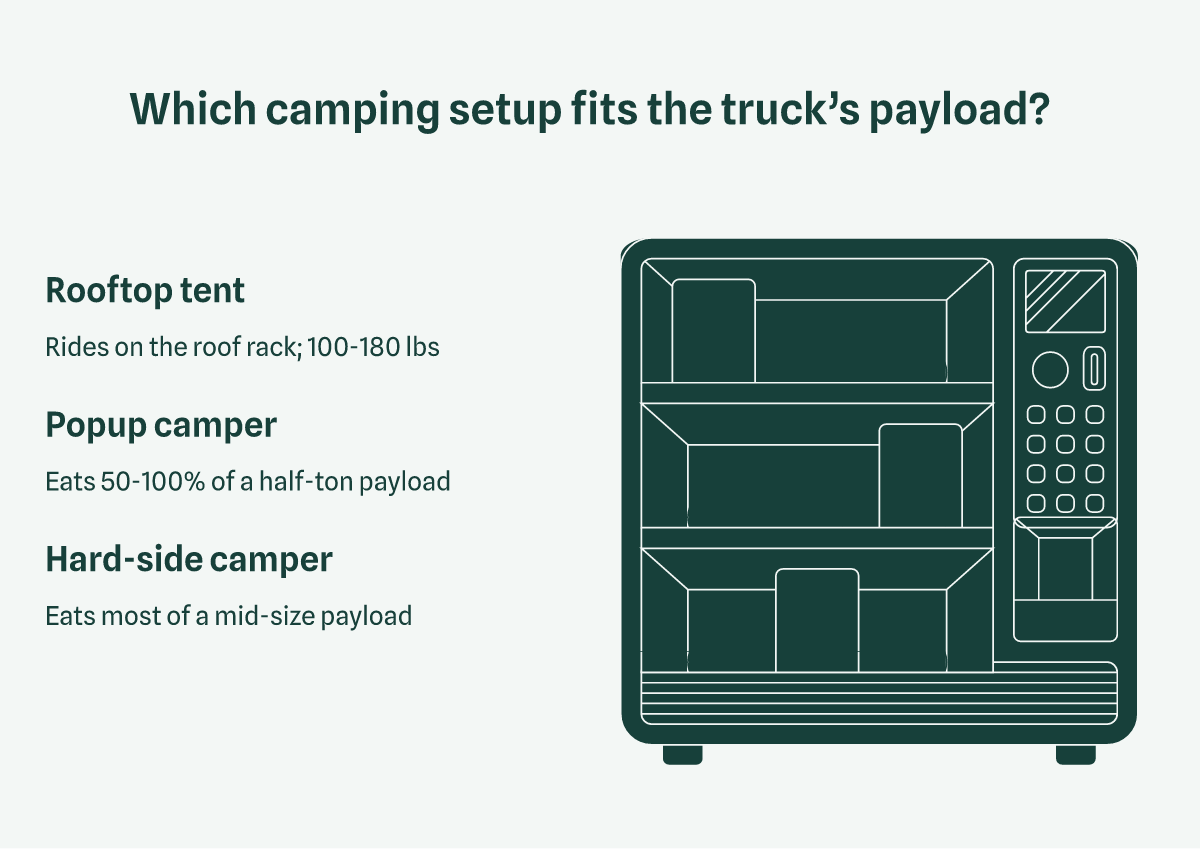
Payload is the row that decides the truck. On a half-ton with a 1,400-1,800 lb payload, a heavy truck camper eats 50-100% of it before you add passengers, water, fuel, and gear, per 4WDTalk. Mid-size trucks with 1,600-1,860 lbs lose most of theirs the same way.
If your payload number is tight, I would skip the camper and run the rooftop tent. If you already own the truck camper, weigh it loaded at a scale before your next trip, not after.
When a Rooftop Tent Camper Wins
Weekend Campers and Daily Drivers
Camp 10 to 15 nights a year? The rooftop tent's lower upfront cost wins decisively for weekend campers, according to 4WDTalk's comparison. That math gets stronger when your truck is also your daily driver and you don't want permanent gear sitting in the bed.
Mild Climates and Off-Road Capability
Rooftop tents also preserve trail manners. Weight rides high, but the rig stays nimble.
One Setup, Several Vehicles
A cartop camper or car top camper rig moves between an SUV and a truck. A slide-in camper doesn't.
My Take
My pick for a first setup is a rooftop tent camper, not a camper shell build. The common advice says buy once and buy big, and I would skip that here. Most people don't yet know how often they will actually go. Start light, learn your real trip length, then size up if the pattern holds.
When a Truck Camper Wins
You Camp 50+ Nights per Year
That's the math that flips this decision. The rooftop tent still wins on upfront cost, but at high trip counts the nightly gap narrows fast.
You Camp in Shoulder Seasons or Variable Weather
Insulated walls, sealed windows, and furnaces let truck campers operate comfortably in temperatures down to -20°F or lower (4wdtalk.com). A fabric RTT has minimal insulation. If your season runs past September, this matters more than any spec sheet number.
You Want Payload-Friendly Weight Placement
Truck bed campers distribute weight low through the bed (Madix Outdoors). If you own a half-ton truck, that placement protects handling and suspension geometry. Rooftop tent weight rides high, and most roof racks carry a 150-200 lb dynamic rating (Madix Outdoors).
You Want One Enclosed System
Enclosed, insulated storage and sleeping in a single unit means no setup and breakdown every time you move. If that routine wears you out, the camper is your answer. My take: if you camp fewer than 20 nights a year, skip the camper. The common advice says buy once and buy big. I disagree.
Cost Math With Real Numbers
Upfront
Running Costs
Fuel is where the gap narrows. That is one trip. Fifty nights a year for five years is when the truck camper's comfort earns its premium.
Payload
Weight placement decides half-ton suitability. A 285 lb lightweight truck bed camper sits low on the bed rails and within most half-ton payloads (Madix Outdoors). A rooftop tent rides at the roofline against a 150-200 lb dynamic roof rack rating, and most tents already weigh 100-180 lbs before you add the rack. I would check your rack's dynamic figure first, because that number is what limits you on the road, not the tent's static rating.
Rooftop Tent Campers: Downsides, Cheapest Options, and the Canopy Question
What are the downsides of a roof top tent camper?
Limited insulation and headroom. A 4WDTalk comparison calls a rooftop tent "essentially a glorified bed with a view," and that is the honest limit. You get a sleeping platform, not living space. Fabric walls lose heat fast in shoulder seasons.
What is the cheapest roof top camper tent option?
A cheap car top camper still needs that rack, so price the pair together.
Can you mount a roof top tent on a canopy?
Yes, if the canopy is rated for it. Most roof racks carry a dynamic rating of 150-200 lbs while driving, and a 100-180 lb tent plus rack hardware pushes against that quickly. Check the canopy's own load rating before trusting it. For canopy-free setups, see Tents for Cars: Every Type That Attaches to Your Vehicle.
FAQ
How to put roof top tent on canopy?
You mount a roof top tent camper on a canopy the same way you mount it to any other roof rack: the tent bolts to crossbars rated for the load, and the canopy has to carry that load through its own structure. Most rooftop tents weigh between 100 and 180 lbs, according to Madix Outdoors. Most roof racks carry a dynamic rating of 150 to 200 lbs while driving, which a loaded tent can push against. Check the canopy's dynamic rating before you drill anything. If the canopy isn't rated for the tent plus gear, the honest answer is that you need a bed rack instead.
What are the downsides of rooftop tents?
Weight carried high, limited living space, and a setup you repeat every time you move. Most rooftop tents weigh 100 to 180 lbs, per Madix Outdoors, and that weight sits at the roof line, which raises your center of gravity. You get a sleeping platform and little else. Standing room? None. You can't cook indoors, and there's nowhere to sit out a storm beyond the mattress. You also break camp to drive anywhere, which gets old on a multi-day trip.
What is the best rooftop camper?
There is no single best rooftop camper, because the right pick depends on your vehicle, climate, and how often you camp. I would start with the hardshell versus softshell question before brand shopping, since that choice drives weight, setup time, and price more than any logo does. If you want the full breakdown of shell types, see Hardshell vs Softshell Rooftop Tents. For a shortlist across body styles and vehicles, the Hardshell Rooftop Tents: Complete Buyer Guide covers the category properly.
What is the cheapest rooftop tent available?
Budget doesn't stop at the tent. I wouldn't chase the absolute floor here. The rack and mounting hardware keep you safe at highway speed, so that's the wrong place to cut corners.
Roof Top Tent owners, is it really worth it?
For weekend campers, yes. For extended trips in cold or wet weather, often no. My read is that the people who regret a rooftop tent bought it for long trips and shoulder seasons. If that's your plan, a truck camper or a four-season ground tent fits better.
Sources
- Overland Truck Camper vs Rooftop Tent (2026 Comparison)
- Truck Bed Camper vs. Rooftop Tent | Madix Outdoors
- Truck Bed Camper vs. Rooftop Tent: Which Is Right for Your Adventures?
- Truck Bed Tent vs Rooftop Tent for Truck: Full Comparison
- Truck Camper vs Rooftop Tent for Overland Travel Needs – Tiny Rig Co
- Best Truck Bed and Rooftop Tents For 2026, Recommended By Experts
- Motorhomes to Rooftop Tents: How to Choose the Best RV (or Camper) for You
- Rooftop Tent vs Camper Trailer: Which Suits You in Australia?